
Every 50 to 100 years, the world gets rebuilt from the foundation up. Not updated. Not upgraded. Rebuilt.
The people who see it early don’t just benefit from it — they define what it becomes. The people who see it late spend the rest of their careers adapting to choices they didn’t make.
We are in one of those moments right now. And most people are still treating it like a software update.
The World Has Changed Twice Before. Pay Attention to How.
The first time was electricity. Before it, every factory was built around a single central steam engine. Shafts, belts, pulleys — everything connected to one power source. When electricity arrived, the first factories just swapped the steam engine for an electric motor. Same layout. Same logic. 30% efficiency gain.
Then someone realized: you don’t need one central motor. You can put a small motor at every machine. The entire architecture of manufacturing changed. Factories were redesigned from scratch. Productivity didn’t go up 30% — it went up 3,000%.
The second time was the internet. Most companies built websites that looked exactly like their print brochures. They treated it as a new channel for old content. Then Amazon built a store that couldn’t exist in physical reality. Google built a business model that had no offline equivalent. The companies that won didn’t digitize their existing model — they invented models that only made sense on the internet.
AI is the third time.
And right now, most of the world is still swapping the steam engine.
Why Calling AI a “Tool” Is the Mistake That Will Cost You
A hammer is a tool. It extends what your arm can do.
AI is not extending what your brain can do. It’s creating a second brain that works in parallel, never sleeps, scales infinitely, and costs almost nothing per unit of output.
That is not a tool. That is a new kind of entity in your organization — and eventually, your industry.
When Klarna replaced 700 customer service agents with an AI system in January 2024, the headline was about the layoffs. But the real story was what the system did: it handled 2.3 million conversations in its first month, with customer satisfaction scores equal to human agents, at roughly 1/700th of the cost. It didn’t assist the support team. It replaced the function.
That’s not a tool. That’s a new world.
The distinction matters because tools get budgeted. New worlds get built around.
The New World’s Architecture
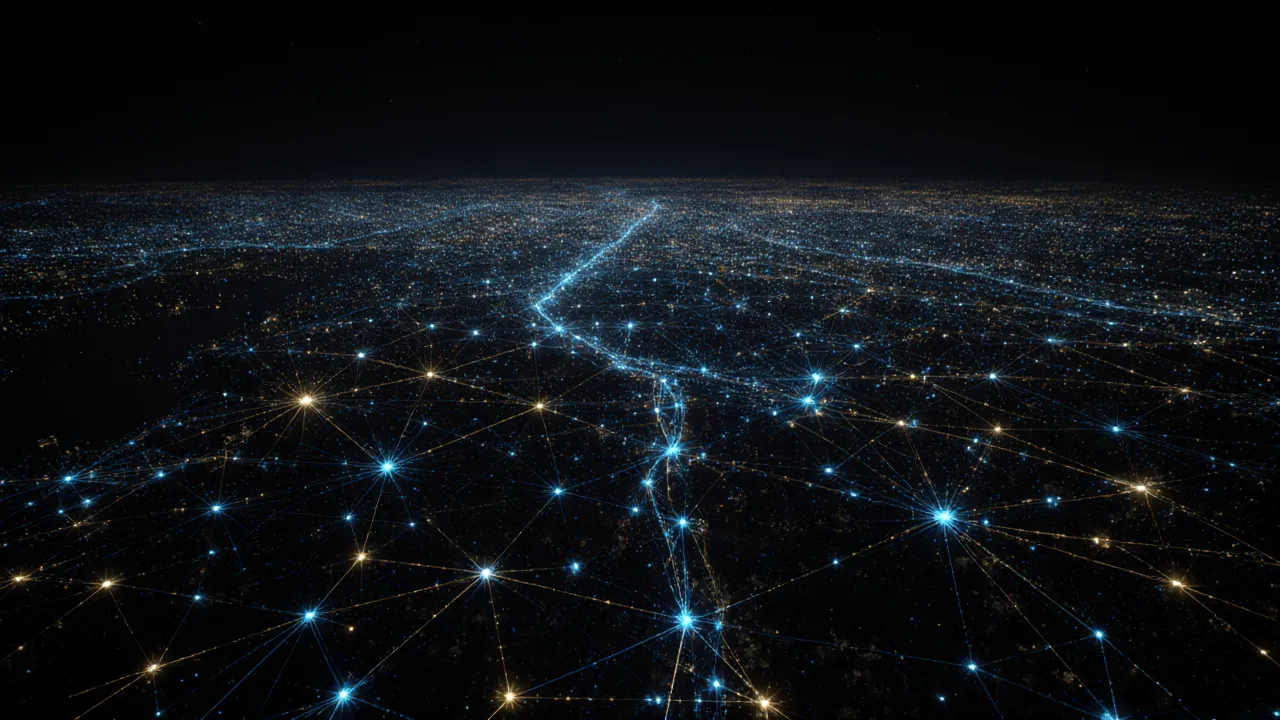
Here is what the new world actually looks like, underneath the hype:
Intelligence is now a commodity. For the first time in history, cognitive work — reading, writing, coding, analysis, decision support — can be purchased by the token at near-zero cost. GPT-4o processes a legal brief for roughly $0.04. A junior analyst costs $80,000 a year. The math is not subtle.
The bottleneck has shifted from intelligence to judgment. Raw thinking is cheap. Knowing what to think about, which outputs to trust, and where to aim the machine — that’s now the scarce resource. This is the same shift that happened when calculators made arithmetic free: the value moved from computation to interpretation.
Distribution and trust are compressing. AI-generated content, code, and products can be produced and shipped in days instead of months. Companies that used to compete on build speed now compete on knowing what to build. The winners will be those who combine judgment with speed — not just one or the other.
The interface layer is dissolving. Voice, text, and agents are replacing buttons and menus. Products won’t be applications you open — they’ll be capabilities you invoke. Every company with a product roadmap built around traditional UX is sitting on a depreciating asset.
This is the new world’s architecture. Not a better app store. A different operating system for commerce, work, and creation.
Who Gets Left Behind (And Why They Won’t See It Coming)

Fair warning: this is the uncomfortable part.
The people most at risk from AI are not the people you’d expect. It’s not low-skill workers. Many of those jobs are too physical, too contextual, or too cheap to automate profitably.
The people most at risk are mid-level knowledge workers who are good at executing defined tasks.
Junior lawyers doing research. Mid-level analysts producing reports. Marketing managers writing copy. Mid-tier developers writing boilerplate code. These are exactly the tasks AI is already doing — faster, cheaper, at scale.
The market for “competent generalist” is collapsing. What remains is at the extremes:
- High-judgment specialists — people who can frame the right problem, evaluate AI outputs critically, and take accountability for decisions
- High-empathy roles — people who build trust through relationships, not information delivery
- People who orchestrate AI — those who can design, prompt, evaluate, and deploy AI systems in complex real-world environments
If your value is currently in the middle — “I do X task reliably” — you have a narrow window to reposition.
The window is open. It won’t be open forever.
The New Power Map
Two axes define who wins in the AI world:
Axis 1 — Speed of adoption (Fast vs. Slow) Axis 2 — Depth of judgment (High vs. Low)
| High Judgment | Low Judgment | |
|---|---|---|
| Fast Adoption | Builders — Define the new world | Operators — Benefit short-term, vulnerable mid-term |
| Slow Adoption | Advisors — Temporarily insulated by expertise | Displaced — Fastest to lose ground |
The Builders quadrant is where the real value will compound. These are not just AI companies — they are companies in every sector that rewire their operations, products, and business models around AI capabilities before their competitors do.
Shopify is forcing every department to ask “what does this team look like if AI handles the routine work?” before any new hiring request is approved. Duolingo cut its contractor base by 10% in 2024 and redirected to AI content generation. These aren’t experiments. These are early declarations of what kind of company they intend to become.
The Operators quadrant is seductive and dangerous. Using AI tools while leaving your underlying business model unchanged is the equivalent of stringing electric lights on a steam-powered factory. You get the glow. You don’t get the transformation.
The Advisors quadrant is shrinking faster than most people in it realize. Deep expertise buys time — it does not buy immunity.
What to Build Now
The new world doesn’t wait for consensus. It gets built by the people who move while everyone else debates whether it’s real.
Three moves that matter right now:
1. Audit your value. Write down the ten things you spent time on last week. For each one, ask: could an AI system do this for $0.10 or less? If the answer is yes for most of them, you are not building the right skills.
2. Find the judgment layer in your industry. Every sector has a layer where the real decisions get made — where context, relationships, and accountability matter. That layer is expanding, not shrinking. Get closer to it.
3. Build something on top of AI, not just with it. The difference between using ChatGPT to write emails and building a product that uses an LLM to transform a workflow is the difference between consuming the new world and participating in its construction.
The electricity analogy has one more lesson: the factories that rebuilt their architecture first didn’t just survive. They became impossible to compete with. Their cost structure, speed, and capacity were in a completely different category.
That window lasted about a decade.
This one might be shorter.
The new world is already being built. The only question is whether you’re reading about it or building in it.